Build on the real canvas.
Real components, live bindings, Tailwind theming — photographed from the builder you ship with. An AI drives the same UI.
// no credit card · one real page, free forever
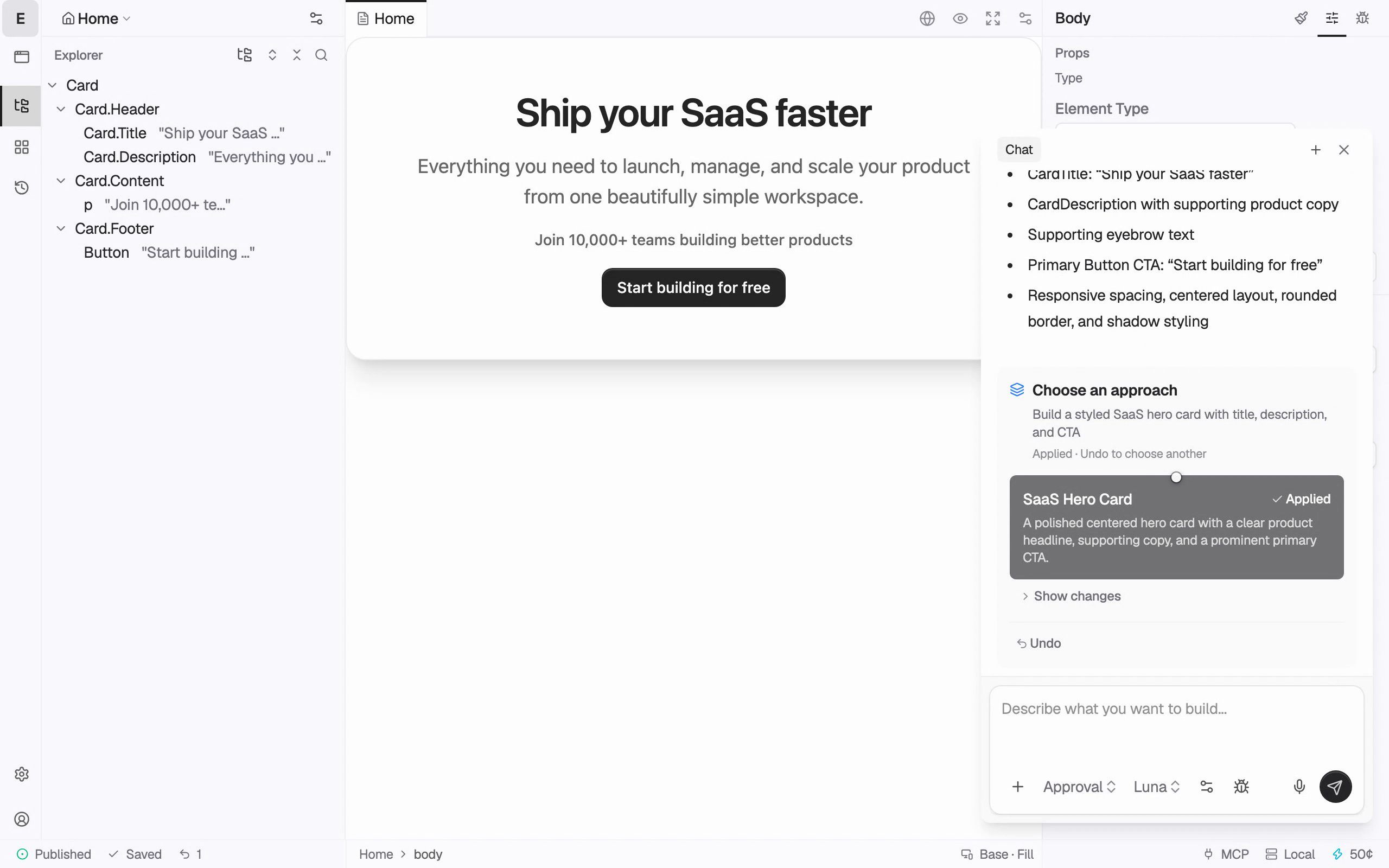
Real libraries. Real props.
Drop in production component libraries, then configure the props and types those libraries actually expose. The inspector is the API.
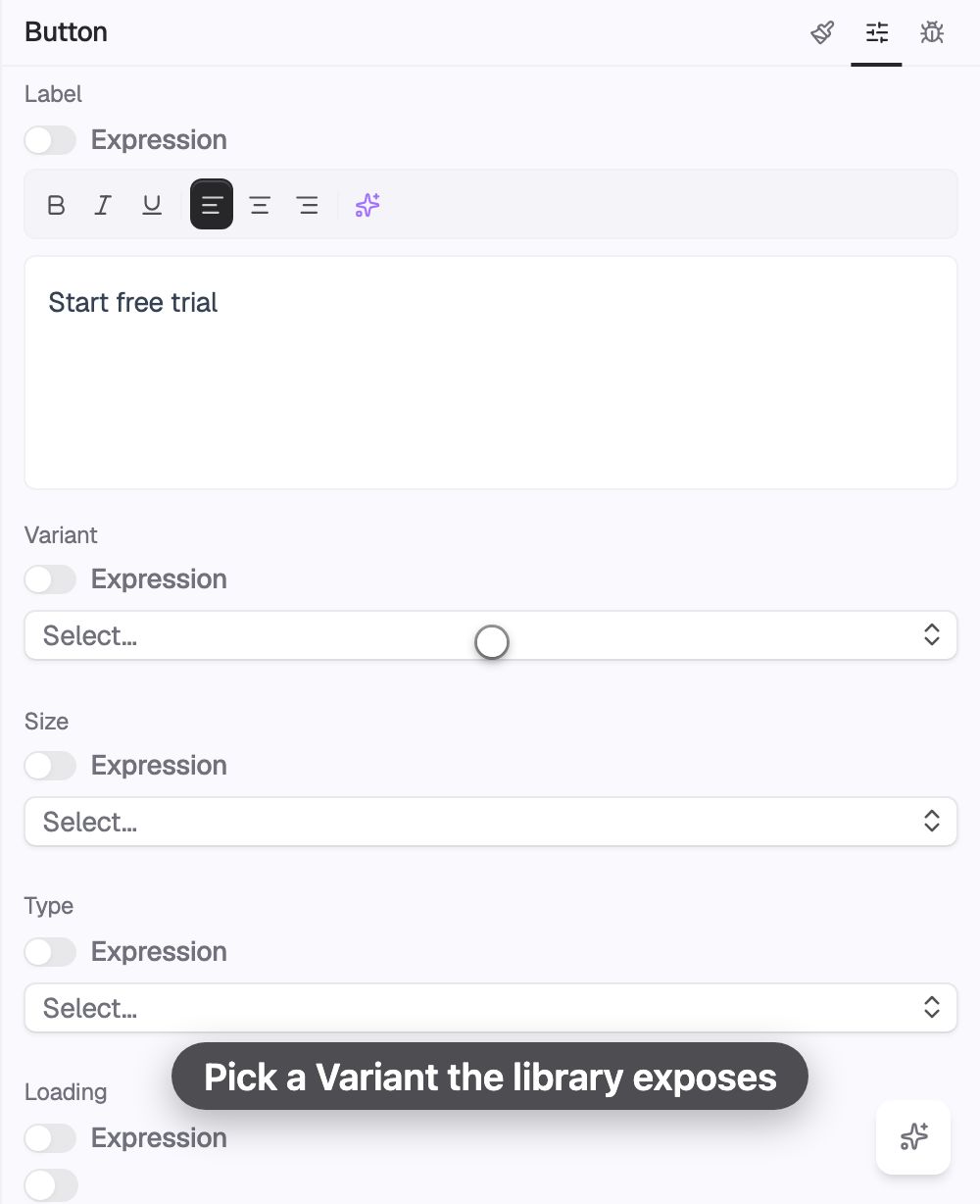
Author your own. Reuse them.
Create a reusable component on the canvas, expose the props it supports, then drop instances and configure them at the call site.
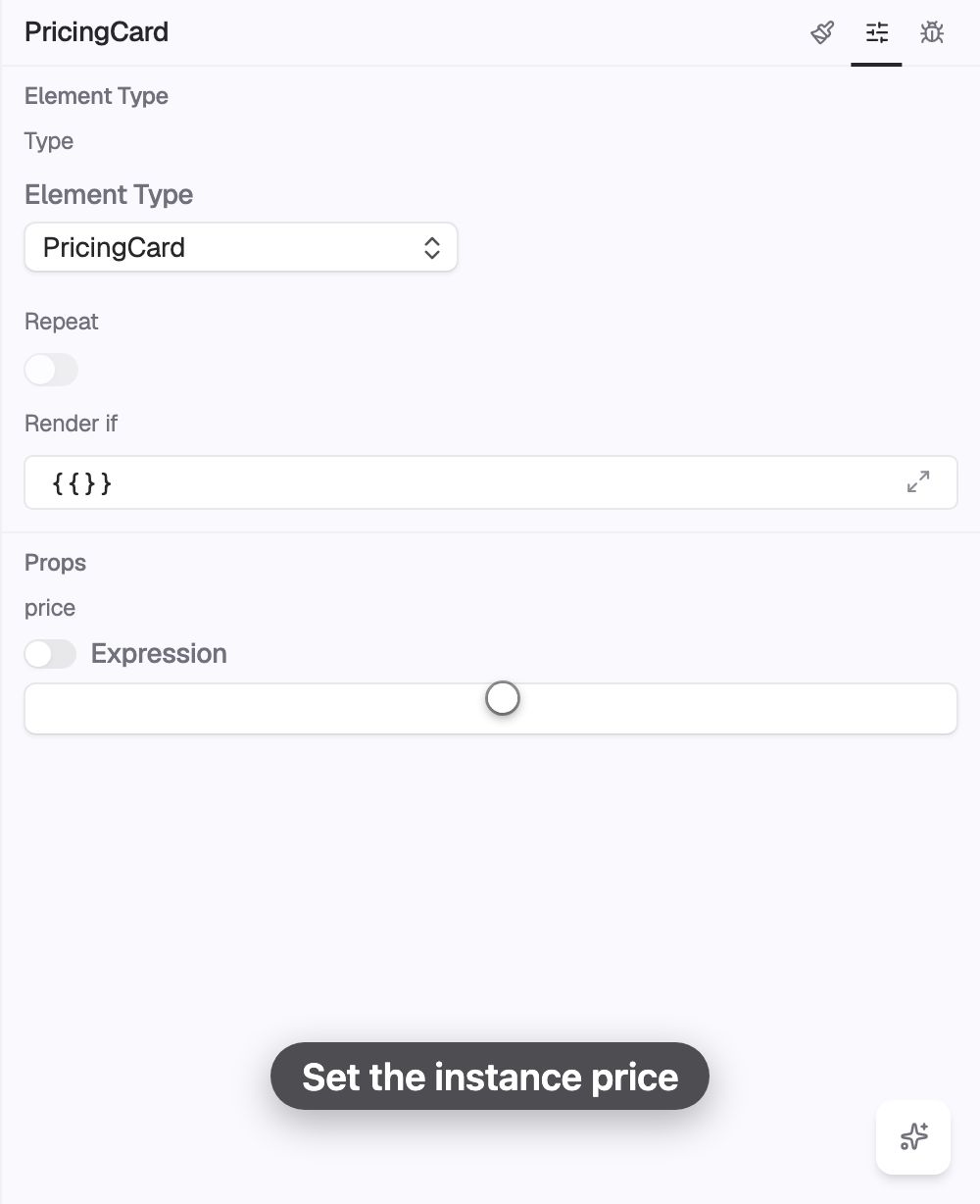
Theme it like real code, because it is.
Shared theme tokens for the app, then individual element styles on the canvas. No editor-vs-site drift.
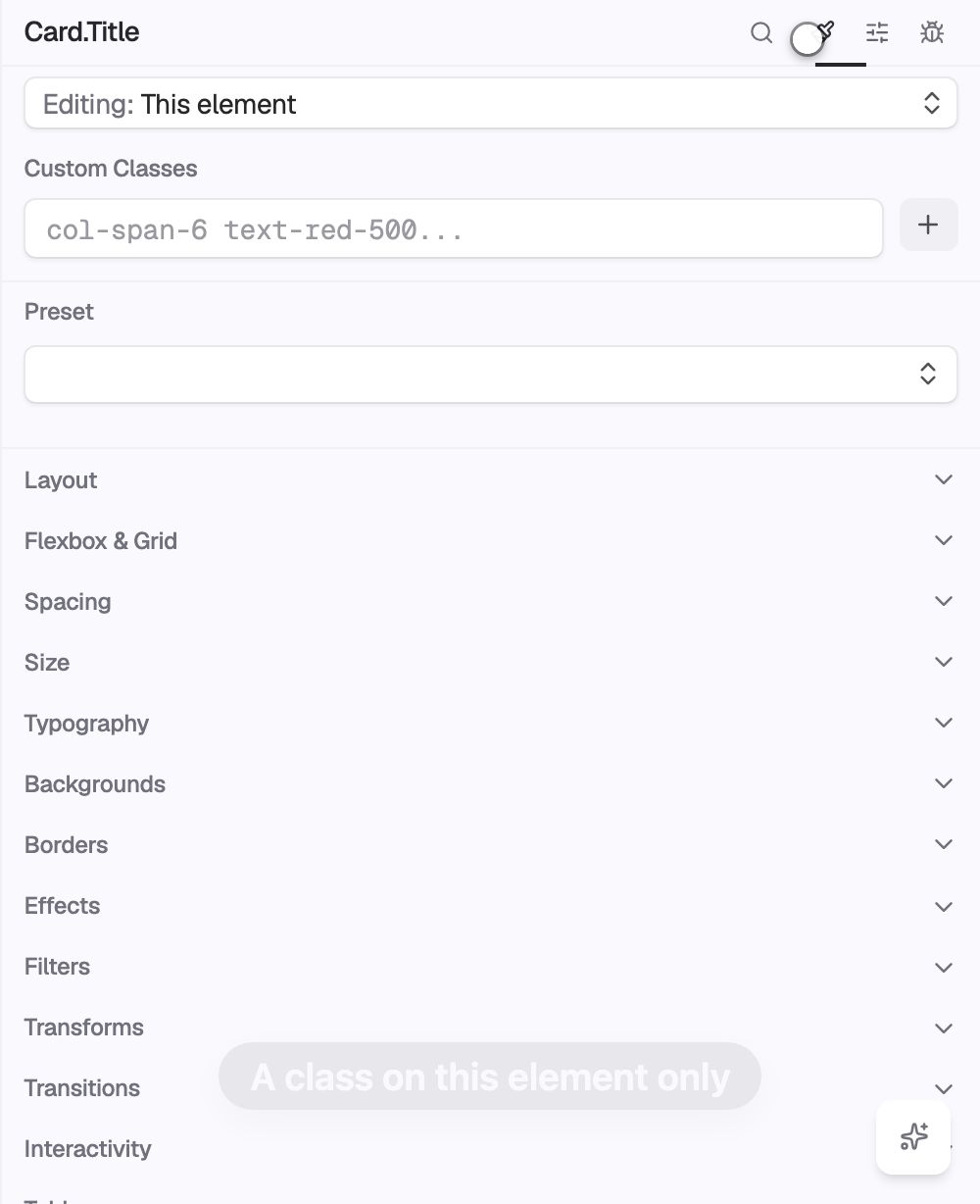
The interface remembers.
A store holds the values a page reads — the period, the plan, the count. Bind a field once and every expression updates.
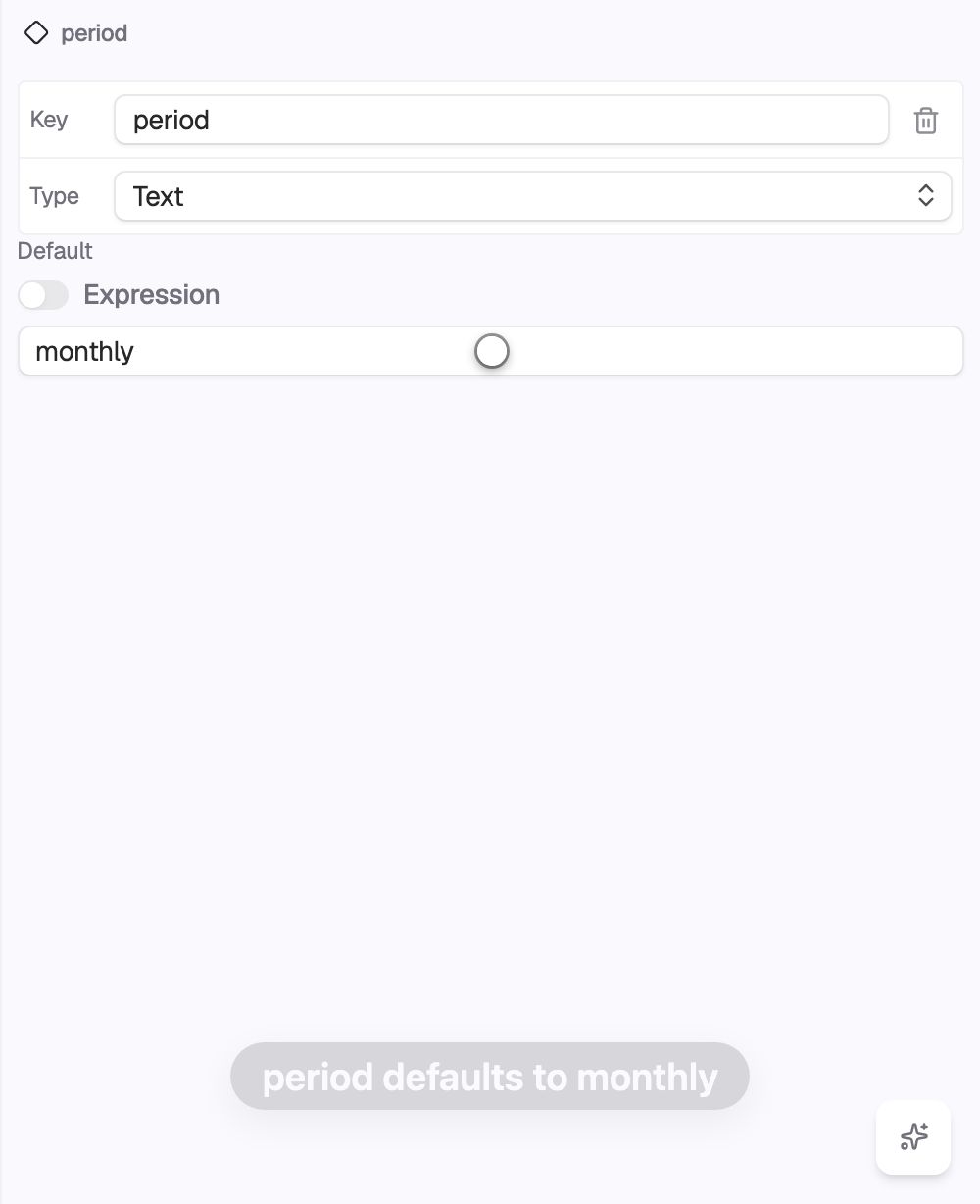
A click changes that state.
An action is a named chain of functions. Bind it to an event — the store updates, the page reflects it.
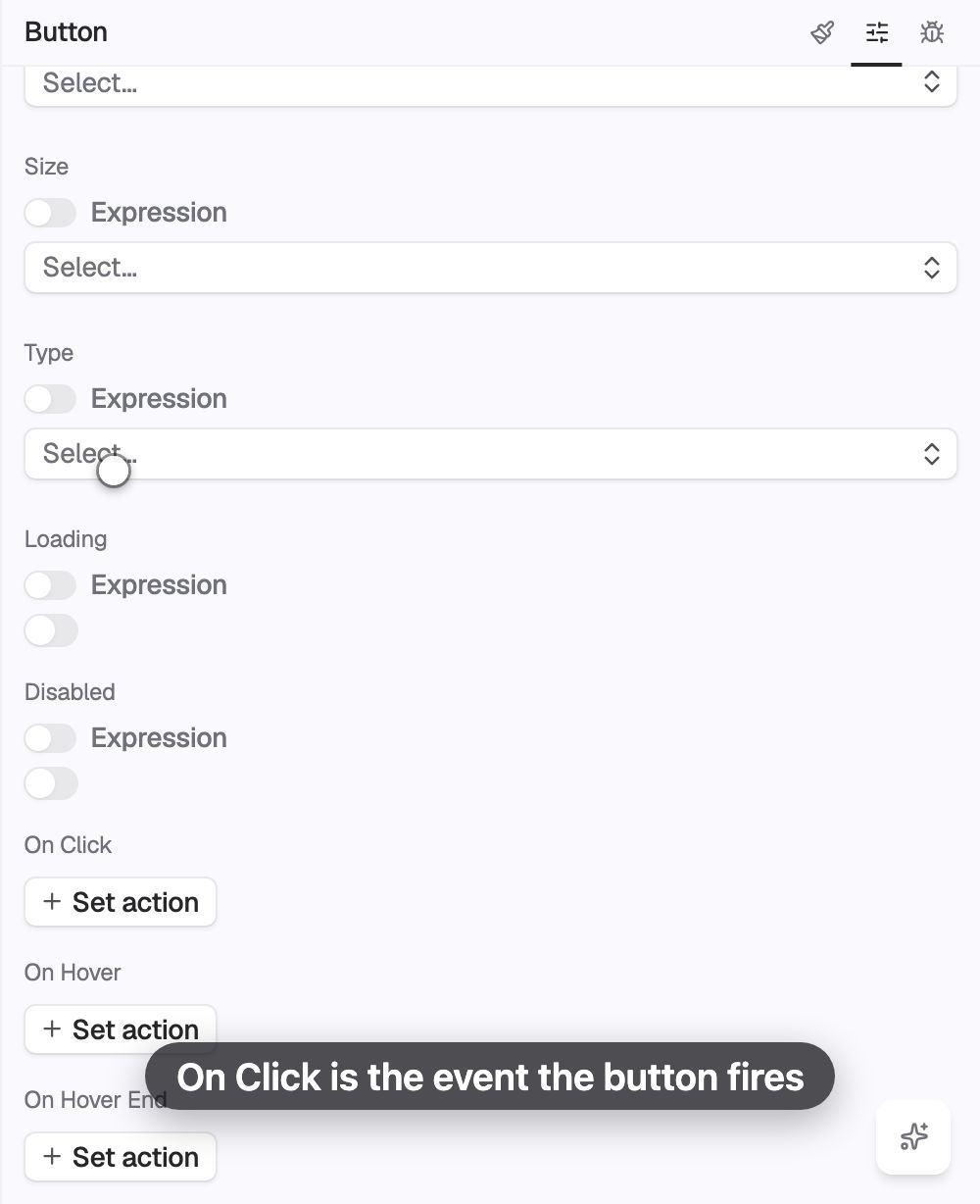
Real, shipped, running
Published apps, not a feature list. Click through to the live site.
No featured apps yet — check back soon.
Every builder eventually says no.
Ours doesn't.
Codelab runs on real code from the first click, so there's no wall to hit and nothing to escape.
Notes from building Codelab
The binding layer is the spine
Every prop on the canvas is a live expression. Here’s what falls out once your UI reads straight from state.
Jul 2026 · 6 min readNo eject, because no dead end
Real code underneath means the ceiling never arrives — and you never have to leave the builder to break through it.
Jul 2026 · 4 min readGive an agent your builder tools
The same MCP tools you use by hand, handed to an AI: scaffold real elements, bind state, ship — live on the canvas.
Jun 2026 · 5 min readBuild something with no ceiling
One real page, free forever. Bring an AI, or build it yourself.